
Old town, young heart.
Seventy kilometres from Cairns, the road climbs out of the tropics into cooler air, crater lakes and a heritage village that has barely changed in a century. This is Yungaburra.
Yungaburra · Atherton Tablelands · Far North Queensland
There is a moment, somewhere on the climb up the Gillies Range, when the windscreen stops fogging with coastal heat and the light turns soft and green. The rainforest opens. The temperature drops a few degrees. And the land flattens into something that looks less like tropical Queensland and more like a highland pasture that wandered off from somewhere else entirely.
That plateau is the Atherton Tablelands, and the village at its heart is Yungaburra. It sits about 750 metres above sea level, roughly 70 kilometres south-west of Cairns, and it has the rare quality of feeling both very old and quietly alive. The name comes from janggaburru, a word for the Queensland silver ash in the Yidiny language, from a time when some sixteen Aboriginal groups lived across this country. Long before timber-getters and railway lines, this was a meeting place. In many ways it still is.
What follows is a local's guide to the village and the country around it: what to see, where to eat, where to stay, and why a town of barely more than a thousand people has become one of the most talked-about corners of Far North Queensland.
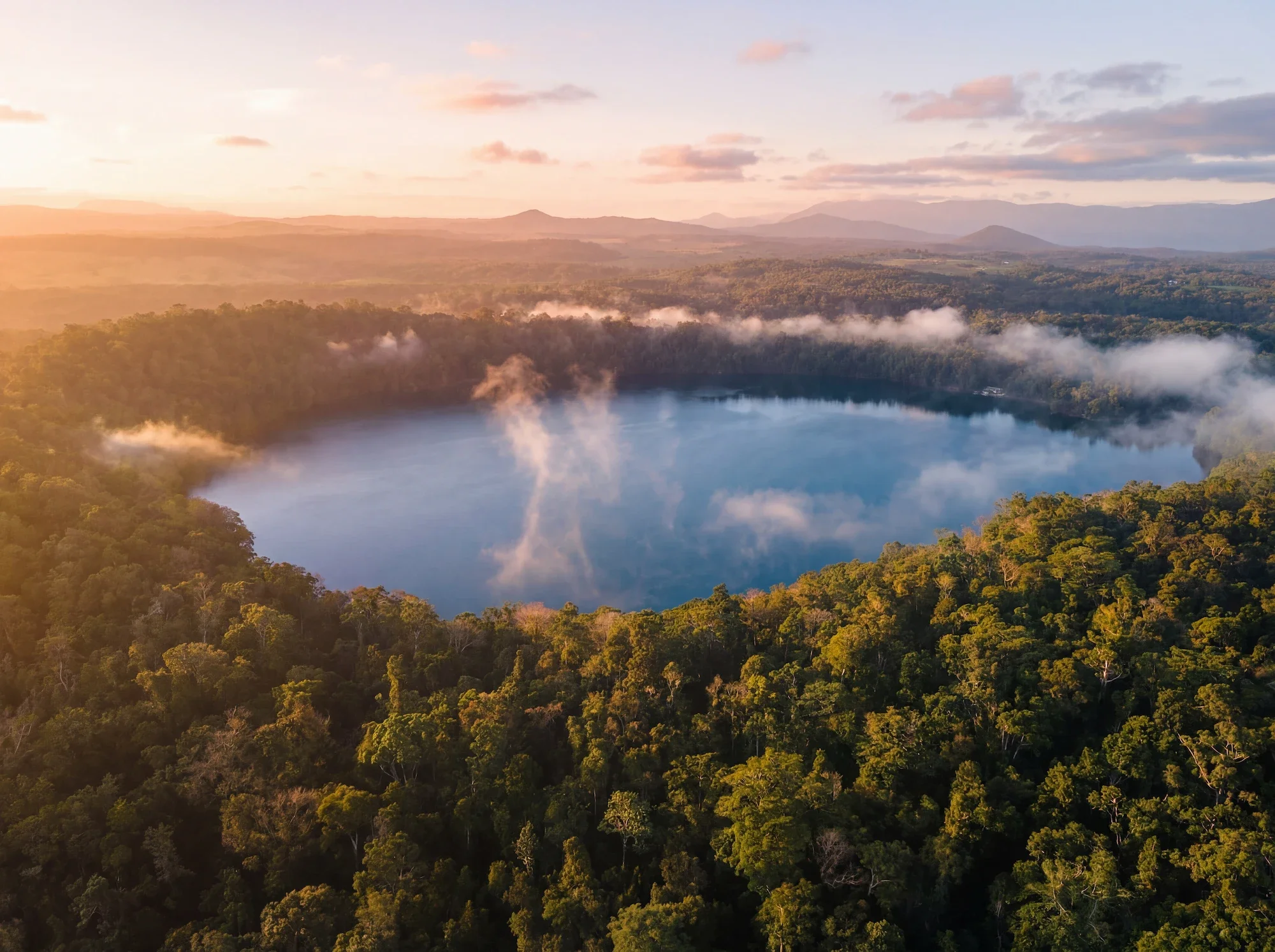
First light over a Tablelands crater lake. The region's volcanic past left a string of these deep, still lakes ringed by rainforest.
Chapter 01
A village frozen in 1910
Yungaburra wears its history openly. With eighteen historic buildings, it is the largest National Trust village in Queensland, and the streetscape has changed remarkably little since the early 1900s, when this was a timber town and the railway had just arrived. Walk the main street and you are essentially reading a Federation-era postcard: timber shopfronts, deep verandahs, corrugated iron warmed by a century of sun.
The undisputed social centre is the Yungaburra Hotel — one of the largest timber hotels in the Southern Hemisphere. Originally the Lake Eacham Hotel, it was built in 1910, and it still does exactly what a great country pub should: cold beer, honest food, and somewhere to settle in for a long yarn. Its Federation architecture and original fittings make a visit feel like a brief and very pleasant act of time travel.
That heritage is not an accident of neglect. It is the product of a community that has chosen, repeatedly, to look after the place — a thread that runs through almost every conversation you have here.
““If you drive through that town, you know people are looking after it. Have you seen all the flowers everywhere? It’s because people are proud of where they live.””
Chapter 02
Crater lakes and rainforest
The landscape around Yungaburra is volcanic, and the most beautiful evidence of that past is its crater lakes — deep, round, spring-fed lakes that sit in the throats of long-dormant volcanoes within Crater Lakes National Park.
Lake Eacham is the swimmer's lake: crystal-clear, ringed by Wet Tropics rainforest, and cool enough to be a genuine relief on a warm afternoon. A flat circuit track loops the shore with rainforest on one side and deep blue water on the other. A short drive away, Lake Barrine is the grander, more storied of the two, with a heritage teahouse on its shore (more on that below) and a 45-minute cruise that takes you out across the crater.
From there the country unfolds into the famous Waterfall Circuit — a self-guided drive linking a string of rainforest falls, of which Millaa Millaa Falls is the most photographed in Australia and a glorious place to swim.
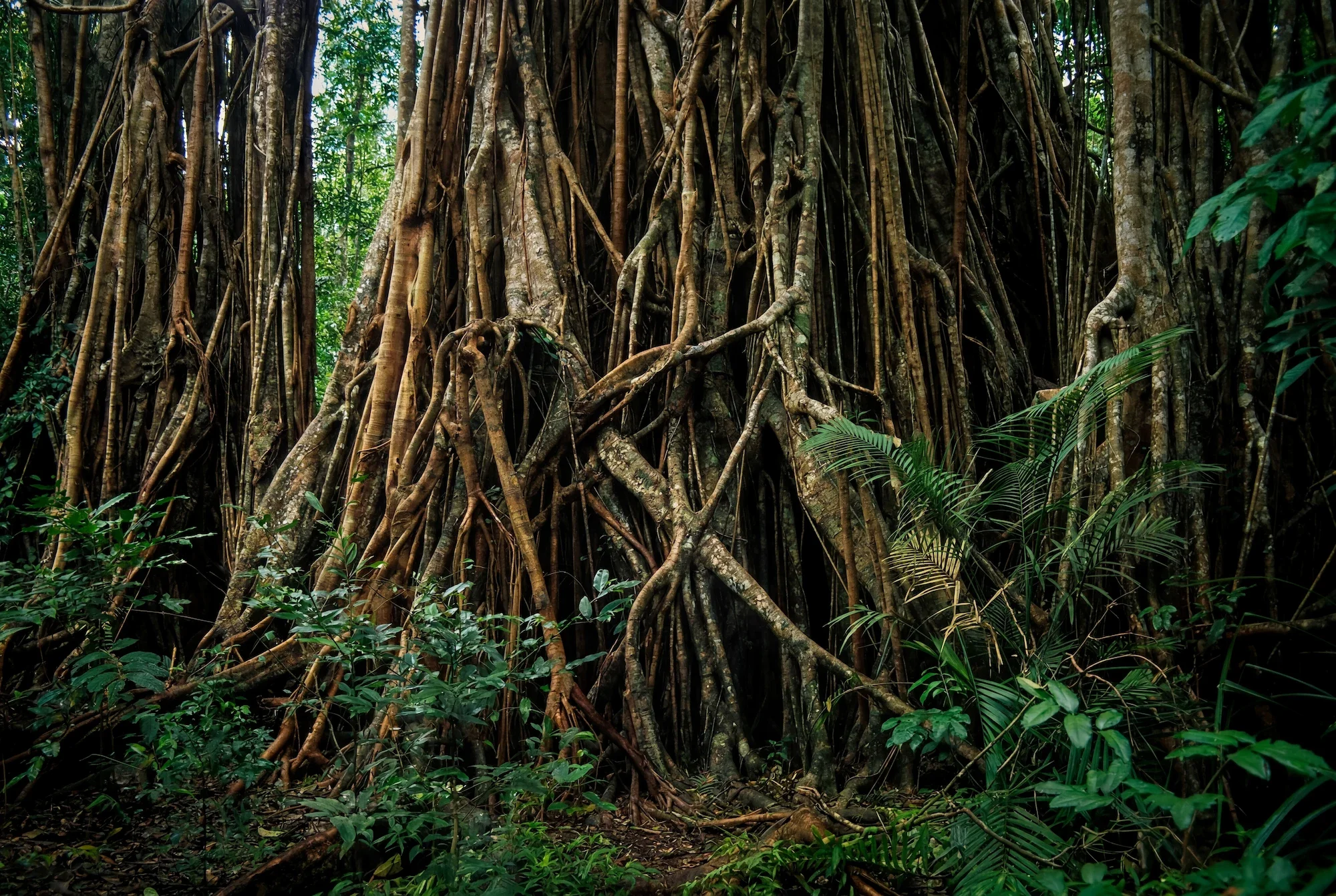
Endangered Mabi rainforest surrounds Yungaburra. Strangler figs like these are the signature of the Tablelands' ancient forests.
Chapter 03
Platypus, cassowaries and a 500-year-old fig
For a village this small, the wildlife is extraordinary — and unusually easy to find. The single best experience is also the simplest: at dawn or dusk, walk down to Peterson Creek and wait quietly. This is one of the most reliable places in Australia to see wild platypus, those improbable egg-laying mammals that the first European naturalists refused to believe were real. The walking track from Allumbah Pocket, at the bottom of Penda Street, is the prime stretch.
Just out of town, the Curtain Fig Tree is one of the most famous trees in the country — a 500-year-old strangler fig whose aerial roots fall in a fifteen-metre curtain to the forest floor. It sits in its own small national park, a short and very worthwhile detour.
The rainforest here shelters more than 350 bird species, plus the endangered Southern Cassowary and the rare Lumholtz's tree-kangaroo. Local guides like Eyes on Wildlife run small nocturnal tours to find the shy, night-active species you would otherwise never see. As the guides will tell you, the magic of the Tablelands is accessibility: this is biodiversity you can reach on an evening stroll.
Chapter 04
Things to see and do
01 Watch for platypus at Peterson Creek
Early morning or late afternoon, from the walking track at Allumbah Pocket. Quiet patience is rewarded — this is one of the most dependable platypus spots in the country.
02 Stand beneath the Curtain Fig Tree
A 500-year-old strangler fig with a dramatic curtain of aerial roots, set in its own pocket of Mabi rainforest minutes from the village.
03 Swim at Lake Eacham
Crystal-clear crater-lake water ringed by rainforest. Bring your swimmers; loop the easy shoreline track afterwards.
04 Drive the Waterfall Circuit
A scenic self-guided loop through the southern Tablelands, with Millaa Millaa Falls as its swimmable showpiece.
05 Take Devonshire tea at Lake Barrine
A heritage teahouse on a volcanic lake, run by the same family for four generations. Pair it with the 45-minute lake cruise.
06 Browse the monthly markets
Held the fourth Saturday of each month — local produce, handmade crafts and a genuinely warm village atmosphere.
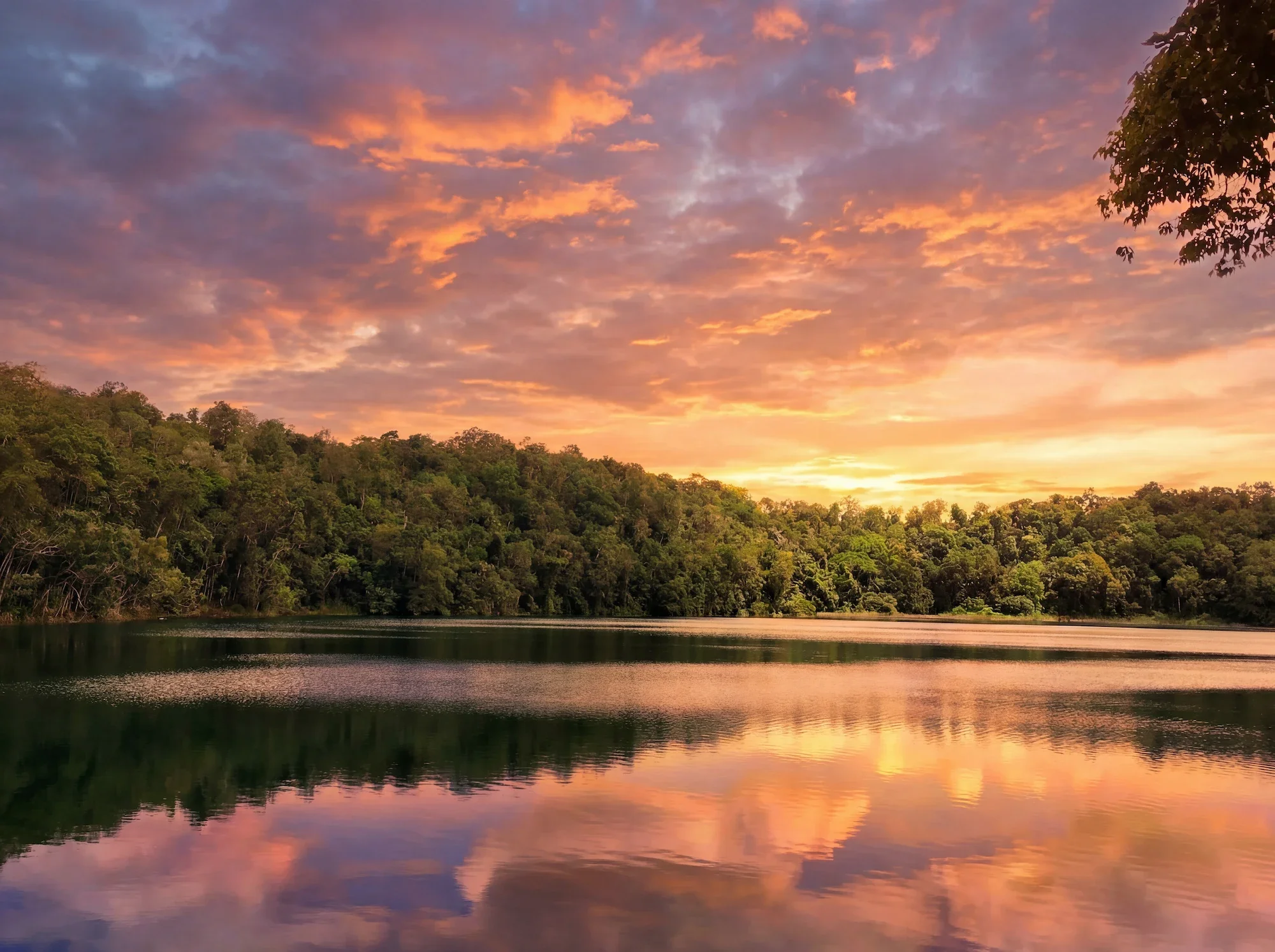
Dawn mist lifts off the rainforest and a crater lake on the Atherton Tablelands, seventy kilometres from the coast.
Chapter 05
Where to eat and drink
For a village its size, Yungaburra eats very well — a mix of proper country pub and cafés that would hold their own in any capital city.
Yungaburra Hotel
The heritage-listed heart of town and its social hub. Great pub food, cold beer, and a 1910 timber building you will not want to leave. 6 Kehoe Place.
Mr Belson
Built in 1914 for a local timber merchant, now one of the village's favourite spots for breakfast and lunch (and the occasional dinner). 2/36 Cedar Street.
Botanica Yungaburra
A café loved for quality coffee, handmade cakes and an easy, welcoming feel right in the centre of the village. 28B Cedar Street.
Lake Barrine Teahouse
A heritage institution on the shore of Lake Barrine, owned and run by the Curry family for four generations. Order the award-winning Devonshire tea. Gillies Highway.
A note on the teahouse
The Lake Barrine Teahouse began life as a railway station. The founder dismantled the old building, carried the timber to the lake, and rebuilt it as a teahouse — simply because he thought the place was beautiful.
He went further: alarmed at the rainforest clearing of the 1920s, he started the Lakes Trust to protect the area. A century later, that instinct to preserve is still the defining trait of this community.
Chapter 07
Markets and the Folk Festival
Two events anchor the village calendar. The Yungaburra Markets take over the village on the fourth Saturday of every month — produce, crafts, coffee and conversation.
The bigger draw is the Tablelands Folk Festival, a boutique festival that has run for some four decades and brings more than fifty acts across folk, blues, jazz, swing and comedy to venues all over town — pubs, halls, cafés and garden stages. There is a Poets Breakfast, workshops, a songwriters' competition and a Grand Parade. It is, as the locals say, magic through music — and it has become part of the village's DNA.
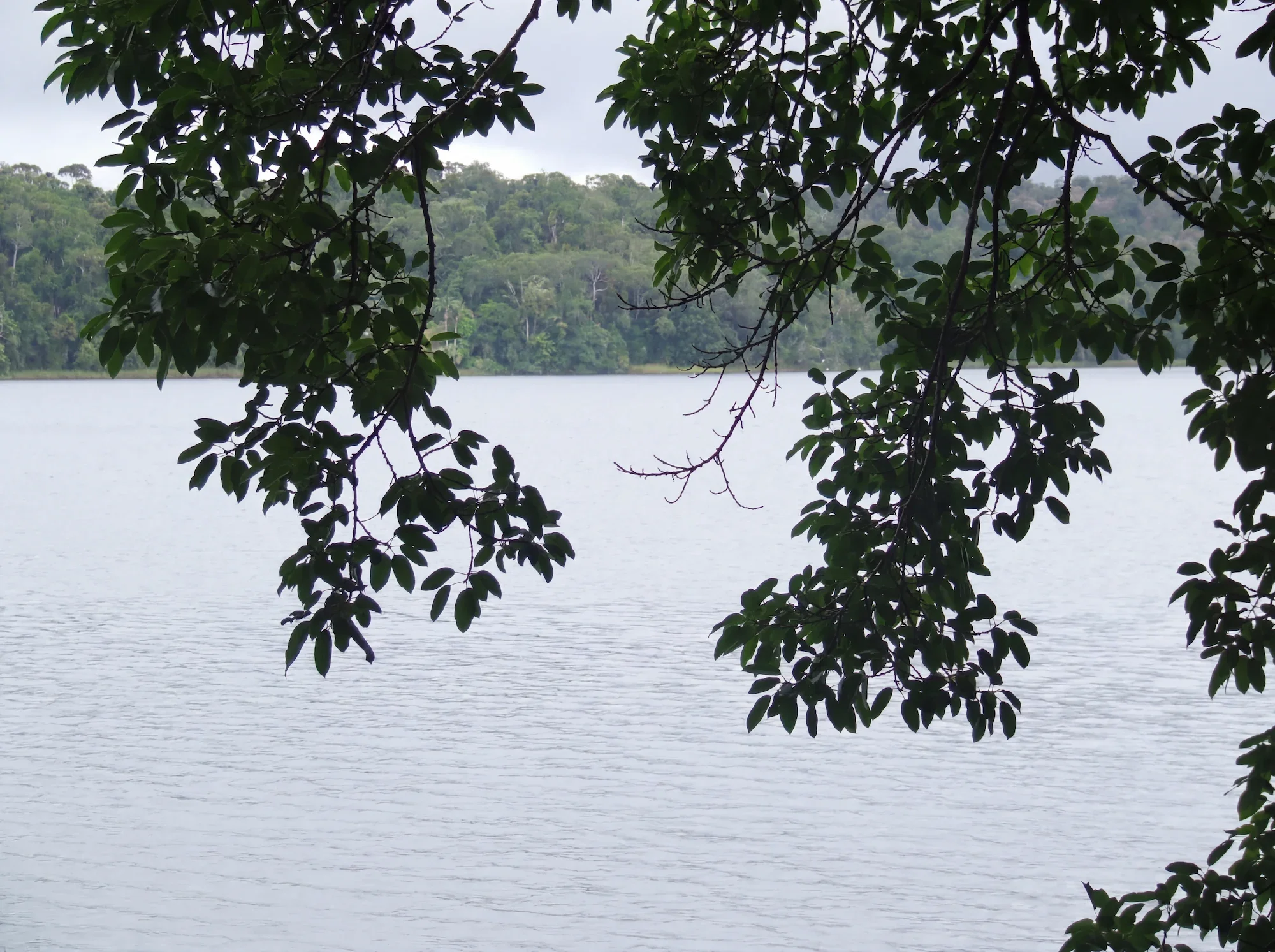
Still water and overhanging forest. The slow, quiet beauty that has drawn people to Yungaburra for generations.
Chapter 08
A town on the rise
For all its heritage stillness, Yungaburra is not standing still. The Atherton Tablelands are in the middle of a genuine population shift — one of the few rural regions in Queensland growing steadily rather than shrinking — as people trade coastal heat and city density for cooler air, space and community.
You feel it in the village: new homes appearing on the edges, demand outstripping a tightly held supply of property, and a steady flow of people choosing to put down roots. And yet, remarkably, the character holds. The growth has so far been gentle enough that the thing people move here for — the heritage streetscape, the slow pace, the flowers on the verges — remains intact.
““It’s definitely growing. A lot more developments going up around the town, but the village itself still keeps its charm regardless.””
That balance — growth that respects the place rather than overwhelming it — is exactly the future worth building toward. It is the reason the Tablelands have captured so much attention, and the reason a quiet village 750 metres above the coast is increasingly a place people want to call home.